Business photo
Botox for frown lines, explained like a real consult

Can Botox Soften 11 Lines Between the Eyebrows?

Those vertical “11” lines between your brows can make you look worried or tense, even on a good day. Many people hear that Botox might help, but are unsure how much it can actually soften the lines, how natural they will look, and what the risks are. This guide walks you through the medical thinking behind treating that area, so you can consider Botox with clear expectations instead of guesswork.

The short answer

What matters most

Yes. For many patients, carefully placed Botox (or similar neuromodulators) can noticeably soften the “11” lines between the eyebrows by relaxing the muscles that create the frown. When those muscles move less forcefully, the skin is not folded as hard or as often, so etched lines can look smoother and fresh lines are less likely to deepen. Botox cannot erase every crease, and deeply carved lines may still be faintly visible, especially at rest. Results depend on your skin, muscle strength, age, and dosing. A qualified medical provider will examine your brow movement, review your health history and medications, explain realistic goals, and adjust units over time for a natural result. At Bryan Medical & Wellness in Kernersville, Botox for 11 lines is planned and injected by experienced medical professionals who prioritize safety, conservative dosing, and follow‑up, so your face looks more relaxed, not “frozen.”

01Botox can often soften 11 lines by relaxing the muscles that pull your brows together, especially when those lines are mainly caused by repeated frowning or squinting.↗
02Deeply etched lines may not fully disappear with Botox alone; improvement is usually most noticeable in movement and may be enhanced by additional skin‑focused treatments.↗
03Safe, natural‑looking results depend on a careful exam of how your brows and forehead move, conservative dosing at first, and a provider who welcomes follow‑up and adjustment.↗
04You share responsibility for safety by giving a complete medical history, following pre‑ and post‑treatment guidance, and speaking up about how the area feels after treatment.↗
05Bryan Medical & Wellness in Kernersville offers Botox within a broader medical and wellness setting, combining certified medical leadership with a relationship‑driven, patient‑focused approach to softening 11 lines.↗

Business photo
A visual pause

Understanding 11 Lines and How Botox Helps

A useful way to think about it

Understanding 11 Lines and How Botox Helps

Before anyone talks about units or injections, it helps to understand what is actually causing those vertical lines, which parts Botox can improve, and where its limits are. That way you can recognize a thoughtful plan when you hear one in the exam room.

01

What are “11 lines,” medically speaking?

The vertical lines between your eyebrows sit over a group of muscles whose job is to pull your brows down and together. When you squint, concentrate, or frown, those muscles contract and fold the skin in the same place repeatedly. Over time, that movement can create lines that show even when your face is relaxed. Early on, these are mostly “dynamic” lines that appear only when you move. As the skin thins and collagen changes with age, the folds can become “static,” remaining visible at rest. Sun exposure, genetics, and how expressive you are all play a role. Understanding whether your lines are mainly dynamic, mainly static, or mixed helps a medical provider predict how much change Botox alone can create.

02

How Botox works on the muscles that form 11 lines

Botox and similar medications are neuromodulators. In small, targeted doses, they temporarily reduce how strongly certain muscles contract. For 11 lines, that usually means softening the muscles that pull the brows inward and downward. When those muscles relax, you cannot frown as deeply, so the skin is not creased as forcefully. Over days to weeks after injection, that change in movement can make the area look smoother and less tense. Dynamic lines typically improve the most. Static lines may soften as the skin gets a break from being folded. The goal at a medically led practice is to use enough product to ease the harsh expression while preserving some natural movement, especially in nearby areas like the forehead and eyes.

03

How much improvement can you realistically expect?

Most patients notice their 11 lines look softer, less angry, and less etched after properly placed Botox. The biggest changes often show up in how you look when you are talking, concentrating, or looking at photos. Friends may comment that you look more rested, without being able to pinpoint why. However, Botox does not resurface or “fill in” the skin by itself. Deep grooves that are present even when you are completely relaxed may not disappear, though they often look shallower. Those static creases sometimes respond better when Botox is combined with other treatments such as medical‑grade skincare, microneedling, or filler, depending on the case. A thoughtful provider will point out which part of your line pattern is movement‑based and which part is related to skin texture, so your expectations match what the medicine can actually do.

Decision guide

Planning Botox for 11 Lines: How to Decide Your Next Step

Once you know that Botox can often help 11 lines, the next questions are whether it makes sense for you right now, how to approach your first visit, and what you and your provider each need to handle for a safe, predictable experience.

01

Are you a good candidate for Botox to treat 11 lines?

Candidacy is not just about having lines. Your health history, medications, muscle pattern, and goals all matter. At a clinic like Bryan Medical & Wellness, an injector will start by asking about prior injections, allergies, neurological conditions, any history of eyelid drooping, and whether you are pregnant or breastfeeding. They will also examine how your brows and forehead move when you make different expressions. You are more likely to be a good fit if you are bothered by the look of your 11 lines, understand that results are temporary, and feel comfortable with gradual, natural‑looking change. If anything in your medical background makes Botox less appropriate, a responsible provider will explain that clearly and talk through alternative options rather than pushing ahead.

02

What you are responsible for as the patient

Your provider carries a lot of responsibility for planning and technique, but your role is important too. Before treatment, you should share your full medical history, list all medications and supplements, and be honest about any previous reactions to injections or aesthetic treatments. If you bruise easily or take blood‑thinning medications, that should be discussed openly. You will also need to follow pre‑ and post‑treatment instructions, such as avoiding certain over‑the‑counter medications or activities if your provider recommends it. After your visit, pay attention to how the area feels and moves, and contact the office promptly if something seems off. Clear communication helps your injector refine your dose at future visits and keeps your care safe, personalized, and predictable.

03

Questions to ask any provider about 11‑line Botox

A calm, thorough consultation is a good sign that you are in careful hands. Consider asking questions such as: Who will be doing my injections, and how often do they treat 11 lines specifically? What training and certifications do they have? How do they decide on dosing for a new patient? What kind of changes should I expect at rest and in motion? How do they handle follow‑up if I have concerns or want a small adjustment? You can also ask how Botox for 11 lines fits with your broader skin or wellness goals. A provider who sees you as a whole person, not just a set of wrinkles, can help you build a plan that feels less like a one‑time procedure and more like a thoughtful part of your overall care.

04

Why combine Botox with broader health and skin planning

Many people first come in for one specific concern, like their 11 lines, and then realize that other factors,sleep, hormones, stress, or skincare,are affecting how they look and feel. A practice that offers primary care, hormone support, weight management, and aesthetics under one roof can connect those dots with you. For example, if tension headaches or eye strain contribute to how often you frown or squint, that might influence both your 11‑line pattern and the rest of your plan. At Bryan Medical & Wellness, the same medical mindset used for chronic conditions and preventive care also informs aesthetic treatment. That means longer conversations, realistic timelines, and a focus on subtle changes that align with your health rather than working against it.

Evidence and expectations
PROOF

How Bryan Medical & Wellness Approaches Botox for 11 Lines

Many clinics offer Botox; fewer combine aesthetics with primary care and ongoing wellness under consistent medical leadership. Here is how Bryan Medical & Wellness backs up its approach to treating frown lines with real credentials and patient experiences.

Medical leadership you can verify

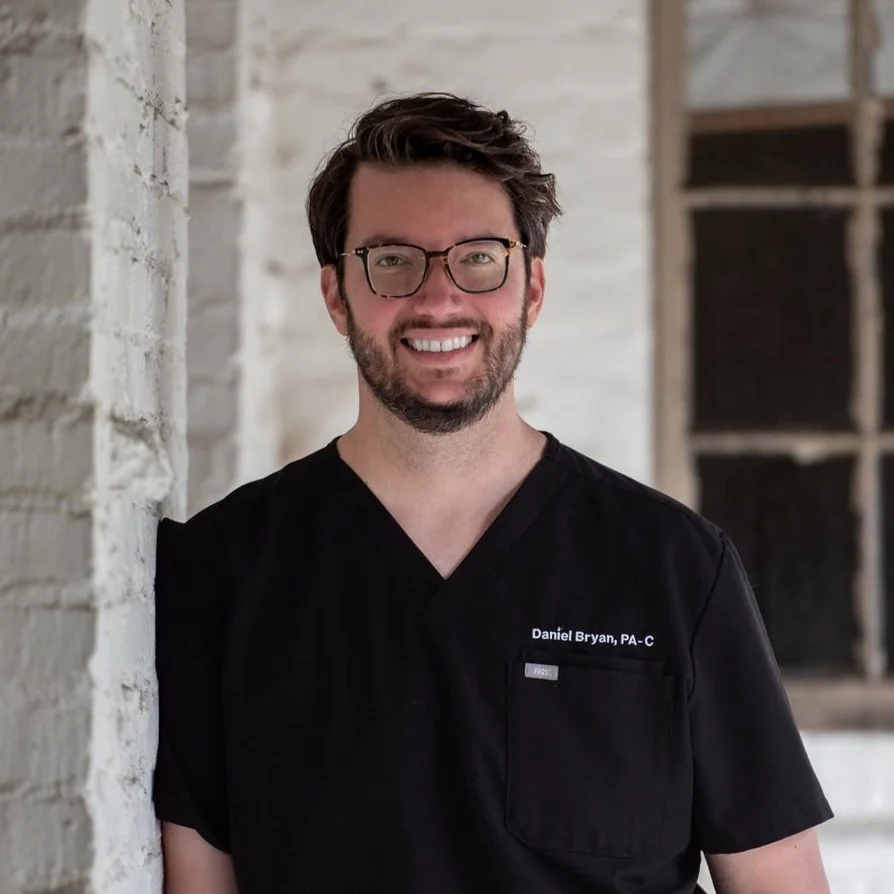
Bryan Medical & Wellness is led by Daniel Bryan-Ledwell, PA-C, MSPAS, a nationally certified physician assistant. That certification reflects formal medical training, board examination, and ongoing education requirements. In practice, it means the person planning or overseeing your Botox for 11 lines is accustomed to thinking through full medical histories, medications, and how aesthetic treatments intersect with broader health. For patients, this can translate into more detailed intake questions, clearer explanations of risks and benefits, and coordination with other aspects of your care when needed. You are not treated as “just an aesthetic patient,” but as someone whose appearance concerns sit inside a larger health story.

Patient feedback about Botox and aesthetic care

Patients who have shared public reviews describe Bryan Medical & Wellness as thorough, professional, and generous with explanations,qualities that matter a lot when a needle is near your eyes and brows. One reviewer notes trusting Daniel completely with her Botox after more than two years of care, highlighting his knowledge and the time he takes to explain everything. Others mention feeling comfortable, heard, and never rushed. Those are not guarantees of a specific result, and they do not replace a personal consultation. They do, however, give you a sense of the clinic’s culture: a clean, welcoming environment; staff who treat you like family; and providers who prioritize communication before and after treatment.

A setting designed for comfort and ongoing care

Multiple reviews mention the office as exceptionally clean, beautiful, and relaxing. That might sound secondary, but for many patients it changes the whole tone of Botox visits. A calm, well‑kept space can make it easier to ask questions, admit fears about looking “frozen,” or bring up other concerns like rough skin texture or weight changes you have been putting off. Because Bryan Medical & Wellness also provides primary care, hormone and weight balance, and laser therapy, you can discuss a wider range of topics in one place. If you start with 11‑line Botox and later want to explore skin resurfacing or wellness support, you are not starting from scratch with a new office. That continuity can be especially reassuring if you prefer to build a long‑term relationship with your injector.

Business photo

Thinking About Your 11 Lines in the Kernersville Area

Living in the Triad, you have access to everything from small boutique practices to large med spa chains, often within a short drive. That can make it tempting to chase specials or pick the closest option without asking deeper questions about safety, follow‑up, and how well someone understands your medical picture. For 11 lines in particular, a local practice that blends aesthetics with primary care can look at more than just the crease. They can consider headaches, eye strain from screens, medications, and general health while planning Botox. Being near Kernersville also makes it easier to come back for touch‑ups, dose adjustments, or quick checks if a result feels slightly uneven. If you are comparing local options, ask each office who actually injects, how often they treat 11 lines, what their follow‑up policy is, and whether they are comfortable coordinating care with your other medical providers. Those answers will matter more to your long‑term results than a few minutes less drive time.

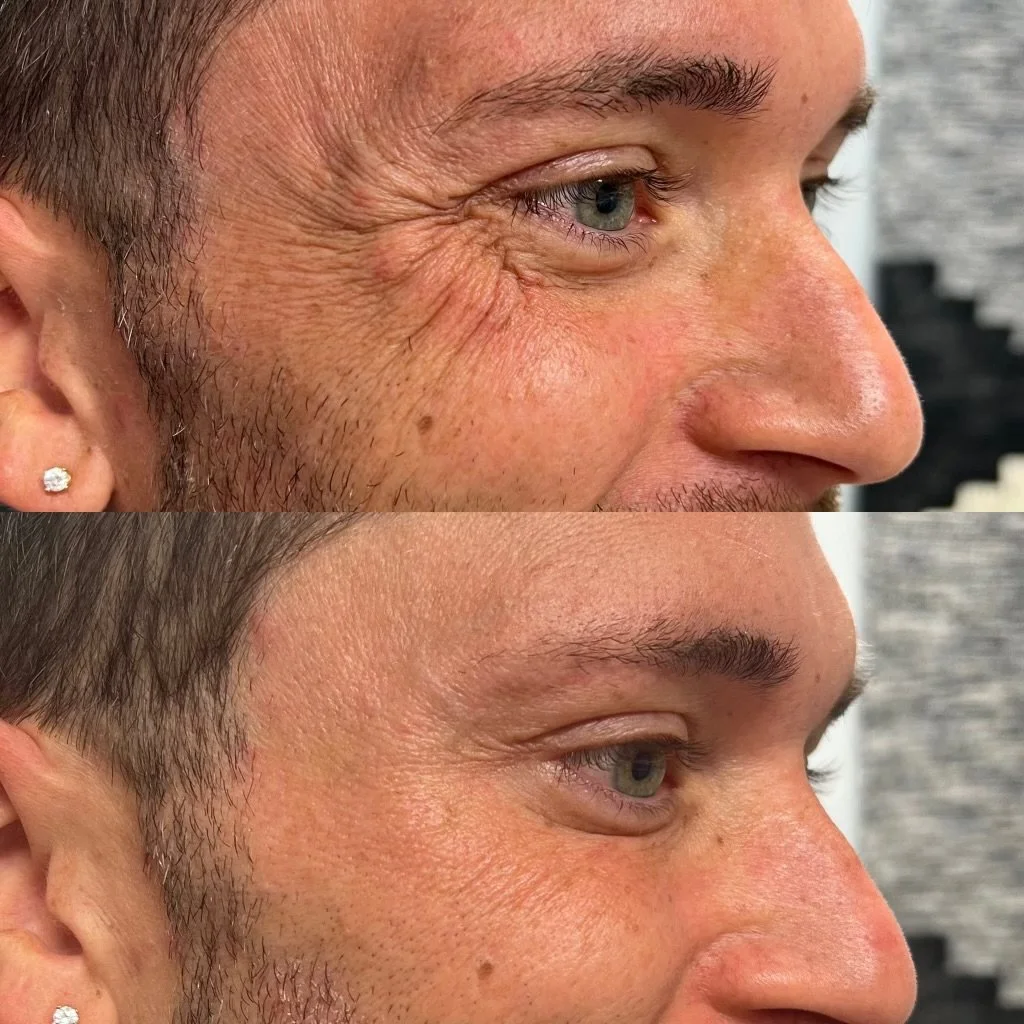
A side-by-side comparison of a man's face shown in two close-up profile images stacked vertically. The top image shows noticeable wrinkles around the outer corner of his eye, while the bottom image shows smoother skin with less visible wrinkling.
Questions worth asking

Questions People Ask About Botox for 11 Lines

As patients in Kernersville ask about softening their 11 lines, certain worries come up again and again,about pain, bruising, age, and what happens if they decide to stop. Here are straightforward answers to help you think through those details.

Will Botox for 11 lines make my forehead or brows feel heavy?

A heavy feeling can occur if Botox is placed or dosed in a way that over‑relaxes muscles you rely on to lift your brows. For 11 lines, careful injectors focus on the frown muscles while preserving support from the forehead and surrounding areas. At your consultation, your provider should watch how your brows move and sit naturally, then plan injection points to soften the frown without dropping your brows. If you have naturally low brows or a history of feeling heavy after Botox elsewhere, tell your injector up front. That information can guide more conservative dosing and a slower, stepwise approach. At Bryan Medical & Wellness, patients are encouraged to report how their brows feel in the first treatment cycle so dosing can be fine‑tuned at future visits.

How long do Botox results for 11 lines usually last?

While individual experiences vary, many people find that improvement in their 11 lines lasts around three to four months before movement gradually returns. Some notice the effect wearing off a bit sooner, others a bit longer, especially after several treatment cycles when muscles may weaken slightly from underuse. Your first treatment is often used to learn how your body responds. A provider may start conservatively, then adjust timing and dose at follow‑up visits based on your feedback and how your lines look in photos or in the mirror. Regular but not overly frequent maintenance can help keep the area softer over time without making you feel like you are constantly in the chair.

Does getting 11‑line Botox hurt, and what about bruising?

Most patients describe Botox injections for 11 lines as a brief, sharp pinch or sting that is over in seconds. Very small needles are used, and the treatment itself is usually quick. Some offices may use ice or topical numbing in sensitive patients, though many find it tolerable without. Bruising is possible any time a needle enters the skin, especially in vascular areas like the brow region. A skilled injector will use techniques that help minimize this risk, but it cannot be eliminated completely. You may notice tiny red marks or mild tenderness that fades over hours to a few days. If you bruise easily, tell your provider; they can discuss timing around events and review any medications or supplements that might increase bruising risk.

What happens if I stop getting Botox for my 11 lines?

If you decide to stop Botox, the medication simply wears off and your muscles gradually regain their usual strength. Over time, your 11 lines will tend to return toward how they would have looked without treatment, adjusted for the normal passage of time. Stopping does not make your wrinkles worse; you just lose the temporary softening Botox was providing. Some patients feel that years of intermittent treatment may help lines age more slowly because the skin was creased less often, but that is a gradual effect, not something dramatic you see overnight. You can step away from Botox at any point. A good provider will respect that choice and help you explore other options if you still want to support your skin.

Is there a “right age” to start Botox for 11 lines?

There is no single age that is correct for everyone. Some people develop strong frown lines in their late twenties or thirties because of genetics or very expressive faces; others do not see noticeable 11 lines until much later. What matters more is how much the lines bother you, whether they are mostly movement‑based, and what your overall health picture looks like. For younger patients, Botox may be used in small, preventive doses to reduce how deeply lines form. For older patients, it can still soften the expression, though etched lines may require complementary treatments to address skin quality. A thoughtful consultation at Bryan Medical & Wellness focuses on your individual pattern and goals instead of tying treatment to a specific birthday.

A healthcare professional wearing black gloves places a blue elastic tourniquet around a patient's upper arm. The patient is wearing a light blue sleeve, and several blood collection tubes with colored caps are visible on a nearby tray.
Your next step

Ready to Talk About Your 11 Lines With a Medical Provider?

If you are curious about Botox for the lines between your eyebrows and would like a calm, medically grounded conversation, Bryan Medical & Wellness in Kernersville is available to help. You can call or text 336-992-0491, email officestaff@bryanmw.com, or use the online booking link to schedule an aesthetics consultation. During your visit, you will have time to explain what bothers you, ask detailed questions, and discuss Botox along with any other options that may apply to your skin, health, and comfort level. There is no obligation to proceed with treatment. The goal is to leave with clear information, realistic expectations, and a plan that feels right for your face and your life,whether that includes Botox for your 11 lines now, later, or not at all.