Business photo
Thinking about “Botox parties” or at‑home injections?

Should I Use a Mobile Botox Provider?

Mobile Botox can sound incredibly convenient: no waiting room, no drive, a quick touch‑up in your living room or at a friend’s house. But Botox is still a prescription medication and a medical procedure, not a beauty shortcut. This page walks calmly through what changes when a provider comes to you instead of you going to a clinic, what that means for safety and follow‑up, and which questions to ask before you let anyone inject your face in a mobile setting.

The short answer

What matters most

You can use a mobile Botox provider if the service is set up with the same safety, medical oversight, and follow‑up you would expect in a reputable office, but convenience should never replace basic standards of medical care. Before saying yes, verify who is actually injecting you, what their medical credentials and experience with Botox are, which licensed medical professional is supervising them, and how emergencies would be handled in a non‑clinical setting. Ask how they store and transport Botox, whether they review your medical history, obtain true informed consent, and offer in‑person follow‑up if you have questions or a complication. If a mobile option cannot clearly answer those questions, or if the environment feels rushed, crowded, or more like a party than a medical visit, you are safer choosing an in‑office provider. Some patients prefer a medically directed clinic, like Bryan Medical & Wellness in Kernersville, where Botox is performed in a controlled setting with established follow‑up and comprehensive care when they want convenience and long‑term support.

01Mobile Botox can be safe, but only if it preserves the same medical standards, assessment, and follow‑up you would expect in a reputable clinic.↗
02Your injector’s licensure, experience, and medical oversight matter more than whether they work in a mobile setting or a traditional office.↗
03The physical environment for injections should support good lighting, stable positioning, clean technique, privacy, and a clear plan for sharps disposal and emergencies.↗
04Ask specific questions about training, emergency protocols, and follow‑up before agreeing to mobile Botox, especially at group events or parties.↗
05In areas like Kernersville and the wider Triad, access to medically directed clinics means you can weigh a short drive against the added control and support of in‑office care.↗

Business photo
A visual pause

Mobile Botox 101: What Changes When the Clinic Comes to You

A useful way to think about it

Mobile Botox 101: What Changes When the Clinic Comes to You

Before comparing specific providers, it helps to understand what “mobile Botox” usually means and how it differs from visiting a medical practice for treatment.

01

What is a mobile Botox provider?

A mobile Botox provider is someone who brings injectable treatments to you instead of you traveling to a traditional office. This might look like individual home visits, group gatherings sometimes called Botox parties, or pop‑up days inside salons, spas, or workplaces that are not primarily medical clinics. The person injecting may be a physician, physician assistant, nurse practitioner, registered nurse, or another credentialed professional, often working under remote medical supervision. The key point is not the label “mobile,” but whether the medical standards around assessment, consent, sterile technique, and follow‑up are kept at the same level you would expect in a reputable brick‑and‑mortar practice.

02

How is mobile Botox different from an office visit?

In a medical clinic, the space is designed and equipped for patient care. Lighting, seating, sharps disposal, refrigeration, documentation systems, emergency protocols, and staff roles are all built around medical safety. In mobile settings, the injector adapts to whatever environment they enter. That can limit control over lighting, positioning, privacy, and sterility, and it often means there is no additional staff immediately available to assist if something unexpected happens. Documentation and follow‑up can also feel more fragmented. None of this automatically makes mobile care unsafe, but it does raise more questions you should have answered clearly before proceeding.

03

Common reasons people consider mobile Botox

People are drawn to mobile Botox for several understandable reasons. Convenience is high on the list; busy schedules, childcare responsibilities, or mobility limitations can make leaving the house difficult. Some people feel less anxious about injections in a familiar setting or are encouraged by having friends nearby during a group event. Others see promotions or discounts tied specifically to mobile services. These are real benefits, and they deserve to be weighed. The challenge is making sure convenience does not overshadow core medical needs like a private health history review, thoughtful dosing, and a safe plan if your body responds differently than expected.

Decision guide

How to Decide If Mobile Botox Fits Your Needs

Once you understand the trade‑offs, you can weigh safety, convenience, and the kind of relationship you want with your injector. These questions help you sort through your options with a clear head.

01

Question 1: How strong are the medical credentials and oversight?

Your injector’s training matters more than whether they work in an office or out of a kit. Ask exactly who will inject you and what their role is: physician, PA, NP, RN, or another license. Then ask how long they have been performing Botox injections, how often they treat the area you are considering, and who provides medical oversight. There should be a clearly identified supervising or collaborating medical professional, not just a brand name or corporate logo. If those answers feel vague, or if you cannot verify licensure with your state, that is a sign to pause and consider a practice where medical leadership is clearly defined, as it is at Bryan Medical & Wellness under Daniel J. Bryan‑Ledwell, PA‑C, MSPAS.

02

Question 2: Does the setting support safe technique and privacy?

Look around the space where injections will happen. Is there enough bright, focused light for the injector to see fine muscle movements? Do you have a clean, stable chair or treatment bed with head support, or are you perched on a sofa at an awkward angle? Are needles and syringes clearly new and opened in front of you, with a proper sharps container nearby? Is your health discussion private, or can others overhear details you might hesitate to share? In a well‑run mobile setup, the injector will be intentional about recreating core elements of a safe treatment room. If the environment feels improvised or more like a social gathering than a medical visit, your result and safety could both be compromised.

03

Question 3: How are emergencies and complications handled?

While serious reactions to Botox are uncommon, they are not impossible, and milder complications such as eyelid droop, asymmetry, or unwanted changes in expression happen more often than people think. In a clinic, there is predictable access to medical equipment, additional staff, and a clear path to escalate care. Ask a mobile provider to walk you through their emergency plan. What would they do if you suddenly felt faint, developed concerning symptoms, or had signs of an allergic reaction? Where is the nearest urgent care or hospital from the injection location, and how quickly could you be transported there? Also ask how they would manage delayed issues like asymmetry: can they see you in person promptly, and if so, where?

04

Question 4: What does follow‑up look like after treatment?

Safe injectable care does not end when the needle is removed. You should know exactly how to reach your provider with questions, how they will review your results, and whether follow‑up visits are available without waiting weeks for the next mobile stop. In a clinic, you typically have access to phone, email, and scheduled follow‑up appointments in the same setting where you were treated. If a mobile injector serves a wide area or travels infrequently, follow‑up may be less consistent. Ask whether they keep a medical record of your doses and injection sites, whether they recommend check‑ins around two weeks, and how they handle touch‑ups. If these details are unclear, an in‑office provider may serve you better over time.

Evidence and expectations
PROOF

What Verified Medical Expertise and Patient Feedback Can Tell You

You may not be able to see behind the scenes of every mobile injector, but you can look for solid evidence of medical training, oversight, and patient experience. Here is how that looks in a clinic setting and what to watch for anywhere you go.

Verified medical leadership in a clinic setting

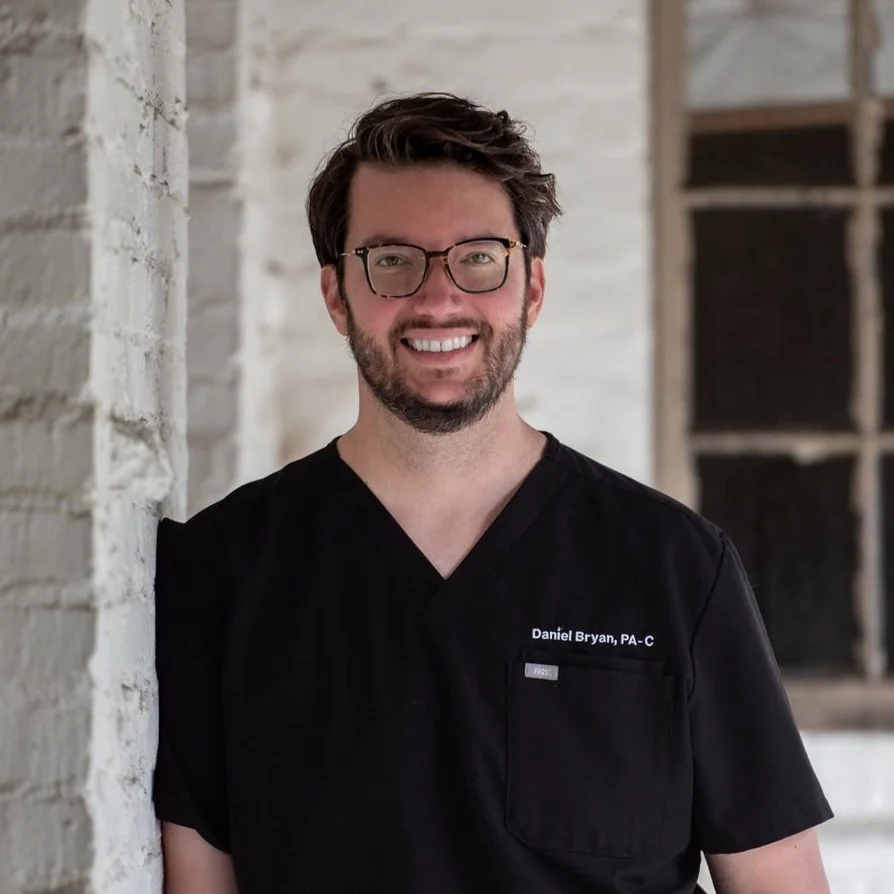
One way to understand what strong medical oversight looks like is to look at how a comprehensive clinic structures its team. At Bryan Medical & Wellness in Kernersville, care is provided under the direction of Daniel J. Bryan‑Ledwell, PA‑C, MSPAS, a nationally certified physician assistant. That certification means he has completed advanced training, passed standardized exams, and maintains continuing education requirements. In practice, this translates into a consistent approach to assessment, dosing, and safety across services, including Botox and other aesthetic treatments. Whether you choose mobile or in‑office care, look for similar clarity about who is ultimately responsible for your medical treatment.

Patient experiences with in‑office Botox and aesthetics

Real patient feedback can highlight what thorough, in‑person care feels like. Patients who visit Bryan Medical & Wellness repeatedly mention feeling heard, having everything explained clearly, and never feeling rushed. One long‑term Botox patient describes trusting Daniel completely with her injections after more than two years of consistent results, while another patient shares how a welcoming, clean office and an attentive provider helped them feel relaxed and supported during aesthetic treatments like microneedling. These reviews reflect more than good bedside manner; they point to the value of being in a space designed for medical care, with time for questions, education, and a relationship that extends beyond a single appointment.

How this kind of evidence can guide your choice anywhere

You may not find the same depth of public information for every mobile Botox provider, but you can look for the same types of proof. Is the injector’s licensure and certification easy to verify? Do reviews mention careful explanations, thorough consultations, and good follow‑up, or do they focus mostly on quick visits and low prices? Does the business describe how medical oversight works, or is that left unclear? By comparing what you see with examples from established clinics that emphasize education, natural‑looking results, and long‑term relationships, you can better judge whether a mobile option is matching those standards or asking you to trade too much safety for convenience.

Business photo

Mobile Botox Around Kernersville and the Triad: What to Think About Locally

If you live in Kernersville or the surrounding Triad, you may see social posts or hear about friends hosting Botox parties or having an injector come to their home or salon. The shorter drives in this area can make mobile services feel especially tempting, because you might think, “Why not have someone come to me instead of taking time off to drive to an office?” The first local consideration is access to traditional care. Kernersville sits between larger hubs like Winston‑Salem and Greensboro, which means you have realistic access to medically directed clinics without an all‑day trip. That can change the trade‑off; saving a 15‑minute drive is different from avoiding several hours on the road. If you can reach a clinic relatively easily, it may be worth the short commute to gain the benefits of fully equipped rooms, staff support, and prompt in‑person follow‑up. Another local factor is ongoing care. If your mobile injector travels in from another city or state for occasional events, ask how they will handle follow‑up if you have a question about your brow or a concern about your eyelid a week later. Will they be back in Kernersville soon enough to see you? Do they share care with a local practice, or would you need to seek urgent help elsewhere? In a clinic based here, such as Bryan Medical & Wellness, Botox is part of a wider menu of services under one roof, so long‑term records, skin plans, and health history can stay in one place. If you are strongly drawn to the idea of mobile injections in the Triad, use geography to your advantage by asking very specific location‑based questions: Where would emergencies be sent in your town? How far is the nearest hospital or urgent care? If something feels vague or hard to pin down, consider whether an in‑person visit to a local clinic might feel calmer and more predictable for you.

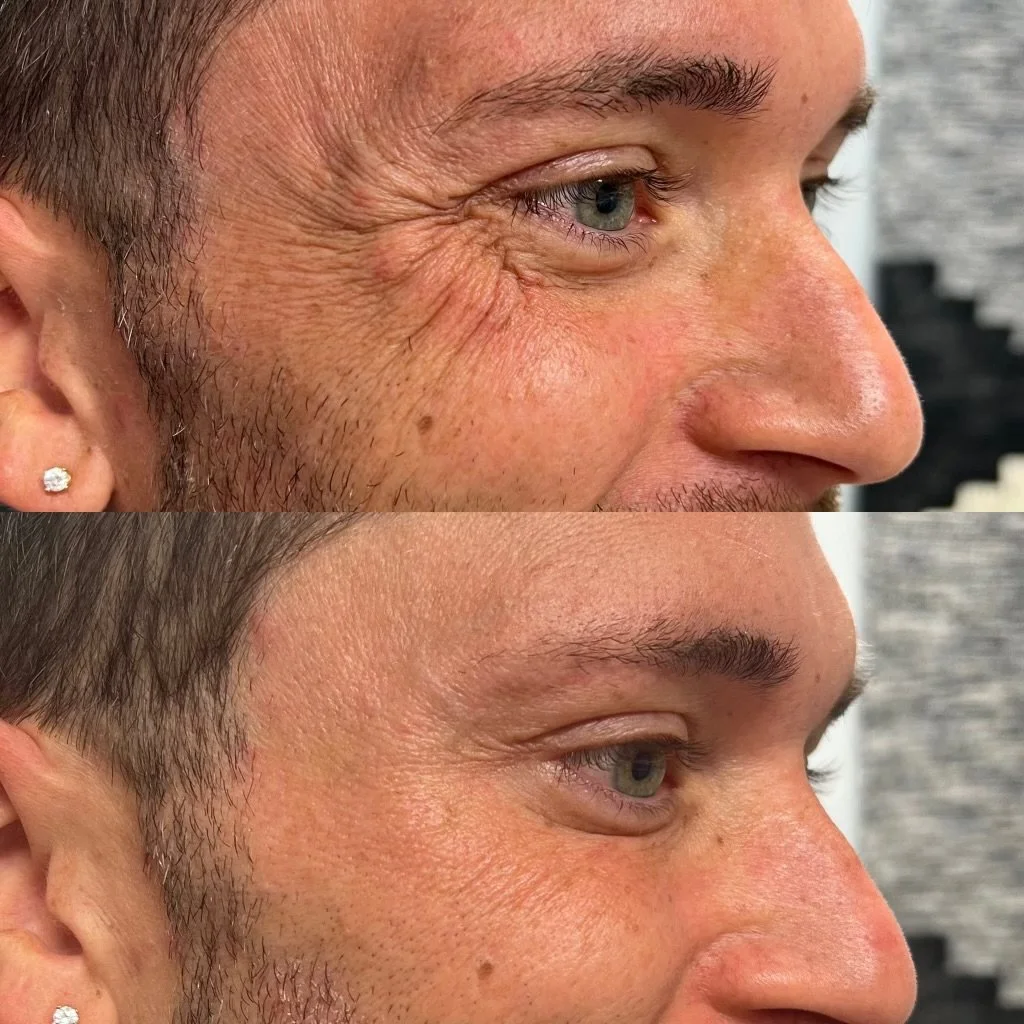
A side-by-side comparison of a man's face shown in two close-up profile images stacked vertically. The top image shows noticeable wrinkles around the outer corner of his eye, while the bottom image shows smoother skin with less visible wrinkling.
Questions worth asking

Mobile Botox Questions Patients Commonly Ask

People usually have the same core worries about mobile Botox: safety, legality, and what happens if something goes wrong. These answers address those concerns in more detail without assuming mobile care is always right or always wrong.

Is mobile Botox legal?

Mobile Botox can be legal if the provider follows your state’s laws for medical practice and delegation. Botox is a prescription medication, so it must be ordered by an appropriately licensed medical professional, and injections must be performed by someone whose license allows that procedure, often under direct or indirect supervision. Some states place extra rules on mobile or off‑site medical services. As a patient, you do not need to decode every statute, but you can ask who is writing your prescription, who supervises your injector, and how their work complies with state regulations. If the answers feel vague or defensive, consider that a red flag.

Are Botox parties safe?

Botox parties can be higher risk because the social setting and group dynamic often work against careful, individualized medical care. Distractions, alcohol, and a focus on making the event fun can pressure people into decisions they have not fully considered. Privacy for medical history and consent can be limited, and the injector may feel rushed to treat several people in a short window. If you are considering a group event, insist on a private, one‑on‑one consultation beforehand, avoid drinking alcohol, and pay attention to whether the injector slows down and treats you as a medical patient instead of a party guest. If that is not the case, scheduling a standard clinic visit is usually safer.

Can mobile Botox results be as good as in a clinic?

Results depend more on the injector’s skill and approach than on the physical address, so yes, it is possible for a highly trained provider to deliver good results in a mobile setting. However, certain practical factors can affect outcome, such as lighting quality, your seating position, interruptions, and how much time is devoted to facial assessment before injecting. A clinic is built to minimize those variables. If a mobile provider brings adequate lighting, takes unhurried photos, has you sit or recline in a stable position, and carefully maps out your muscles and expressions, your chances of a satisfying, natural result improve. If the process feels rushed or casual, quality can suffer.

What should I ask a mobile injector before booking?

Focus on six key areas: training, experience, oversight, environment, emergency planning, and follow‑up. Ask what licenses and certifications they hold, how many Botox treatments they perform each week, and who is the supervising or collaborating medical professional. Ask where the injections will take place and how they maintain cleanliness and privacy. Request a clear explanation of how they would handle immediate reactions and delayed complications, including where you would be seen and by whom. Finally, clarify how you can reach them afterward and whether in‑person follow‑up is available. A confident, ethical provider should be willing to answer these questions directly.

If I prefer in‑office care now, can I ever switch to mobile later?

Yes. Many patients start with a clinic visit to establish a relationship and understand how their face responds to Botox, then decide later whether they are comfortable exploring mobile options. Beginning in a medical office allows you to experience a thorough consultation, see your initial results under controlled conditions, and learn what kind of follow‑up you need. If you eventually consider mobile Botox, you will have a clear reference point for how a well‑run treatment should feel. You can then hold any mobile provider to that standard, rather than guessing whether a rushed group event or improvised setup is good enough.

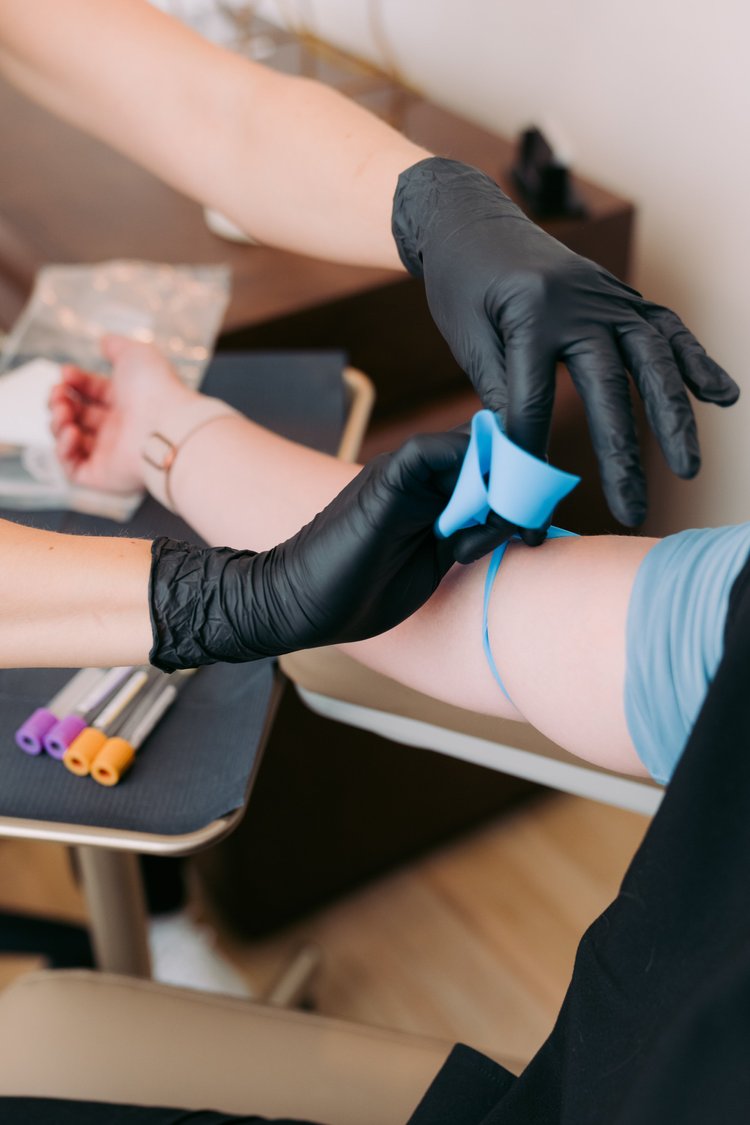
A healthcare professional wearing black gloves places a blue elastic tourniquet around a patient's upper arm. The patient is wearing a light blue sleeve, and several blood collection tubes with colored caps are visible on a nearby tray.
Your next step

Want Botox with Clear Safety Standards and Follow‑Up?

If you are unsure about mobile Botox but know you want smoother lines and a natural, rested look, scheduling a consultation in a medically directed clinic can give you clarity. At Bryan Medical & Wellness in Kernersville, Botox is part of a broader approach to aesthetics, primary care, and wellness under the direction of nationally certified physician assistant Daniel J. Bryan‑Ledwell, PA‑C, MSPAS. You can ask questions, review your health history, and talk through whether Botox or another option fits your goals before anything is injected. To schedule a visit, you can call 336-992-0491, email officestaff@bryanmw.com, or use the online booking link on bryanmw.com. There is no obligation to proceed with treatment at your first visit. The goal is to help you make a calm, informed decision, whether that means booking Botox in the office, exploring other treatments, or deciding to wait.